Why Korean Ads Are So Hard to Understand (LG Gram Explained)
Why are Korean ads so hard to understand? This post breaks down a clever LG Gram ad and explains the double meaning behind “철들다” in a simple, learner-friendly way
I haven’t been able to write much lately because I’ve been busy,
but recently I felt like I wanted to start organizing different expressions again—
things I notice while teaching students,
as well as interesting aspects of the Korean language.
Personally, I’ve traveled abroad several times,
and when I was in the U.S., I had an interesting experience with English ads.
I could understand each individual word,
but when I looked at the full sentence, I often found myself thinking:
“What does this actually mean?”
“Why would they phrase it like that?”
So I ended up searching for the meaning quite often.
That’s when I had this thought:
👉 Would Korean ads feel the same way to foreigners?
Advertisements need to deliver a message in a very short time,
so they often rely on cultural context, trending expressions,
and idiomatic language.
That’s why I thought it would be meaningful
to break down and explain these expressions one by one.
Today’s Ad: LG Gram
The ad I’m introducing today is for the LG Gram laptop.
When I first saw it, I thought:
“This is really well made.”
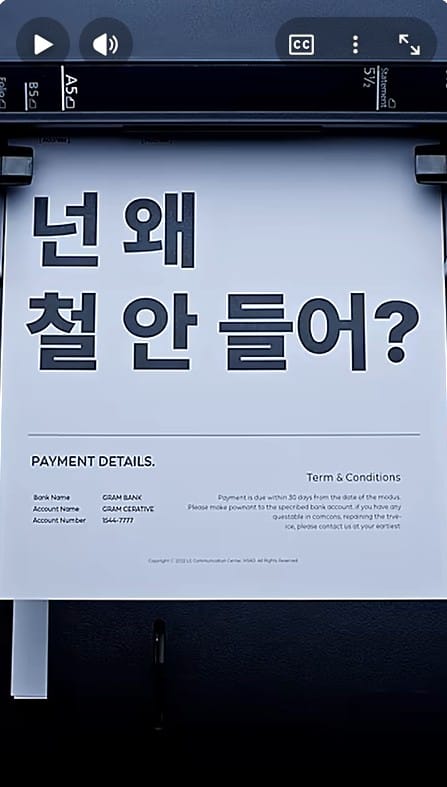
The slogan is simple but very impactful:
- “넌 왜 철 안 들어?”
“Why haven’t you grown up yet?” - “철 들면 어깨 나가잖아요” “If you grow up (use iron), your shoulders will give out.”
- “철 들지 말고 에어로미늄 들어” “Don’t use iron—use aerometal instead.”
At first glance,
if you understand the words “iron” and “to carry/use,”
you can already guess the main idea.
Seeing the model holding a laptop
and knowing that “iron” refers to metal,
you might think:
👉 “Oh, this must be about weight.”
And honestly, that alone already delivers the message.
But the real brilliance of the ad comes next.
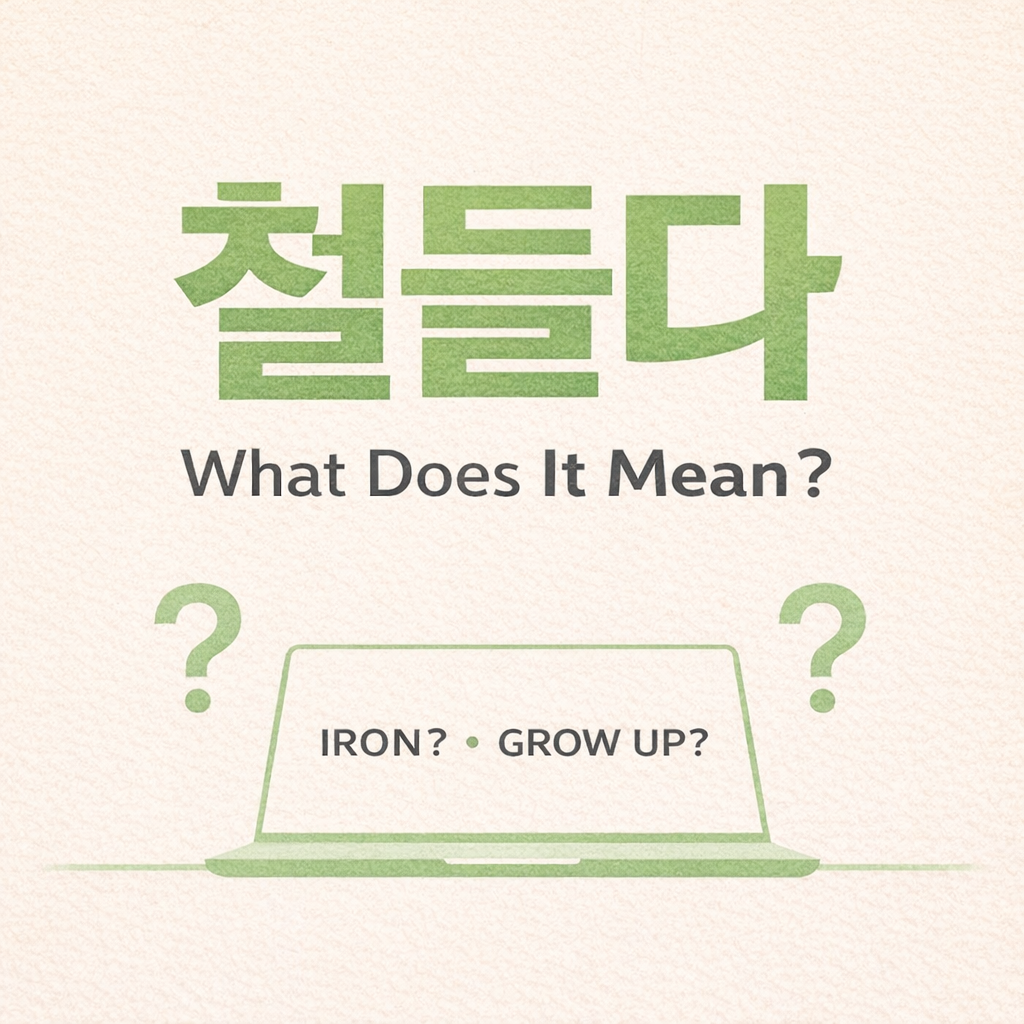
The Double Meaning of “철들다”
This ad is titled:
👉 [LG Gram] Don’t Use Iron, Use Aerometal | Office Worker Version
At the beginning of the ad,
we see a man who is supposed to be an office worker,
but he’s wearing shorts and holding candy.
It feels a bit mismatched, right?

That slightly childish and carefree image is intentional—
it makes him look like someone who hasn’t quite “grown up” yet.
And then the ad opens with this question:
👉 “Why haven’t you grown up yet?”
In Korean, the phrase “철들다” means
👉 to mature or to become more responsible.
For example:
👉 “When are you going to grow up?”
means
👉 “When will you start acting like an adult?”
But this ad cleverly uses the phrase in two ways at once.
A Shift in Meaning
The original question is:
👉 “언제 철들래? ?”
(When will you become mature?)
But the model responds:
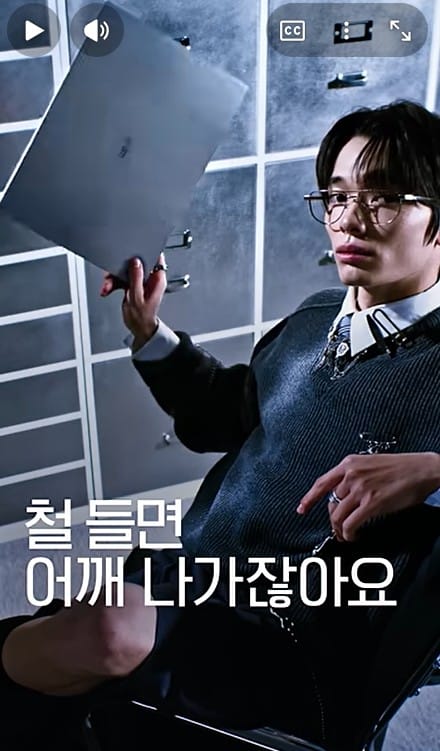
👉 “철 들면 어깨 나가잖아요”
Here, “철” shifts meaning—from
👉 maturity
to
👉 metal (iron)
Also, the expression
👉 “어깨 나가다”
literally means “shoulder goes out,”
but actually means
👉 to strain or injure your shoulder.
So the real meaning becomes:
👉 “If I carry a heavy metal laptop, my shoulders will hurt.”
The Core Message
Finally, the slogan concludes with:
👉 “Don’t use iron—use aerometal instead.”
Here, the word “들다” plays multiple roles:
- 철 들다 → to mature
- 철 들다 → to use/carry metal
- 들다 → to hold or use
👉 The same expression is repeated,
but with layered meanings.
Why This Ad Works So Well
What makes this ad impressive is that
it doesn’t just describe the product.
👉 It uses linguistic ambiguity (double meanings)
to deliver its message.
Another interesting point is how
“not being mature” (철이 안 들다),
which is usually negative,
is reframed as:
👉 being free
👉 being light
👉 being flexible
Another Expression: “어깨 나가다”
Another useful expression from this ad is:
👉 “어깨 나가다”
It literally translates to “shoulder goes out,”
but actually means:
👉 to strain or injure your shoulder.
Similar expressions include:
- “무릎 나간다” (your knees will give out)
- “허리 나간다” (your back will give out)
For example:
👉 “If your posture is bad, your knees will give out.”
= You might hurt your knees, so be careful.
Conclusion
Korean often packs multiple meanings into very short phrases.
While these nuances feel natural to native speakers,
they can be especially interesting—and sometimes confusing—
for language learners.
I plan to continue breaking down expressions like this
to help people understand Korean more deeply.
If you enjoyed this post,
stay tuned for the next one 🙂