Chuseok vs. Mid-Autumn Festival: How Korea and China Celebrate Differently
Chuseok and China's Mid-Autumn Festival share the same lunar date, but their traditions differ. Compare food, family customs, ancestors and the full moon.
If you've spent time in East Asia, you may have noticed something interesting.
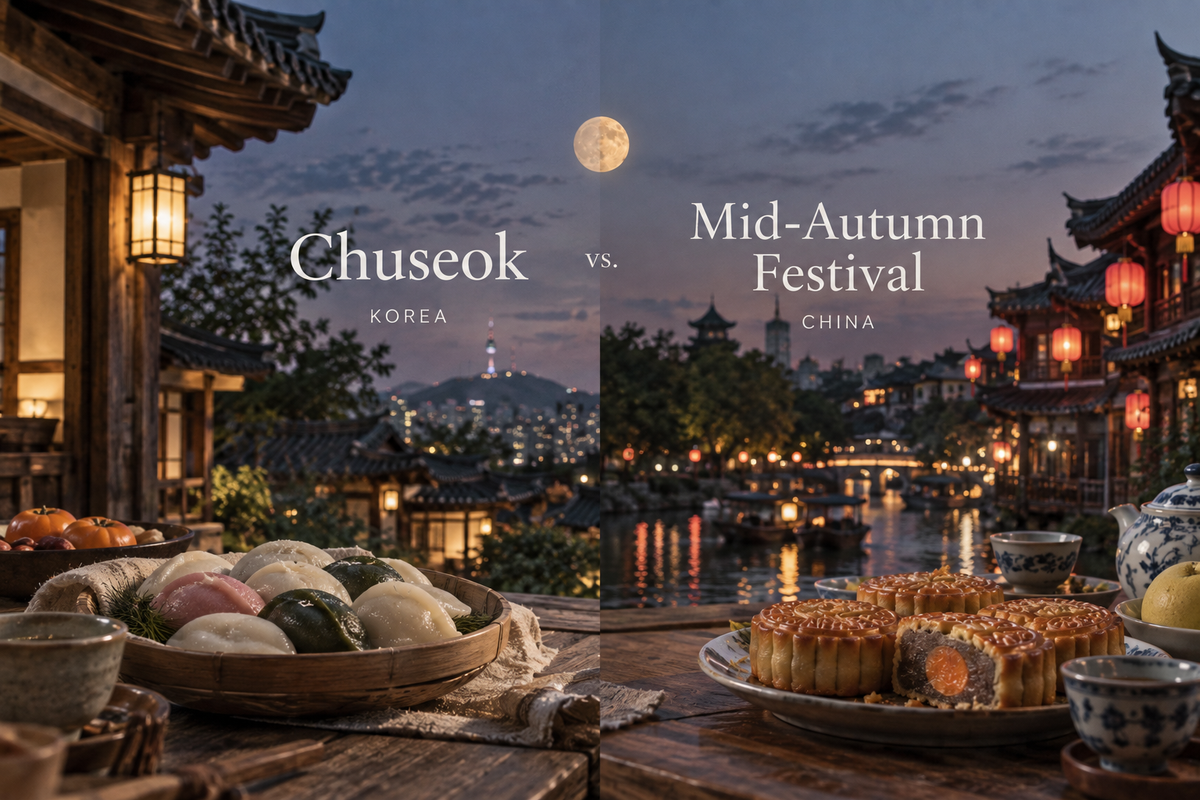
Korea celebrates Chuseok (추석), while China celebrates the Mid-Autumn Festival (中秋节, Zhōngqiū Jié).
Both fall on the 15th day of the eighth month of the lunar calendar, and both are major traditional holidays associated with family, the autumn harvest, and the full moon.
So are Chuseok and the Mid-Autumn Festival basically the same holiday?
Not quite.
They share some similarities, but once you look at how people actually celebrate them, the differences become much clearer.
The Biggest Similarity: Family Reunion
The most obvious similarity is family.
Traditionally, Chuseok is one of the biggest occasions for Koreans to return to their hometowns and spend time with relatives. In China, family reunion is also one of the central meanings of the Mid-Autumn Festival.
There's also a reason the full moon fits this idea so well.
A full moon is round and complete, and in Chinese Mid-Autumn traditions in particular, that roundness has become closely associated with family reunion. Mooncakes themselves are usually round and carry the same symbolism.
But this is where the celebrations begin to take different directions.
Korea: Chuseok Has a Strong Connection to Ancestors
Traditionally, one of the most important parts of Korean Chuseok has been honoring ancestors.
Families may perform charye (차례), an ancestral memorial ritual involving a table of specially prepared food.
Another traditional custom is seongmyo (성묘)—visiting the graves of ancestors to pay respects. Families have also traditionally tended ancestral graves around this period.
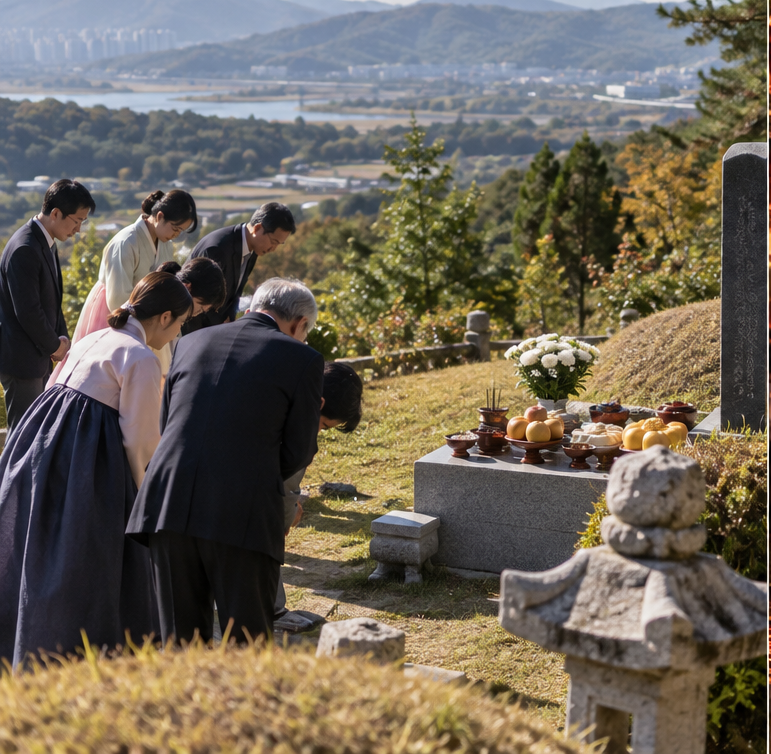
That's why preparing for Chuseok could once involve a surprising amount of work.
Families prepared fruit, vegetables, meat, fish, jeon and other dishes for the ritual table before eventually sharing the food together.
Today, however, Korean Chuseok is changing. Some families still follow these traditions closely, while others simplify the ritual or don't perform charye at all.
I wrote more about how modern Chuseok is changing in Korea in my previous post.
China: The Moon Takes Center Stage
The Chinese Mid-Autumn Festival has a noticeably different atmosphere.
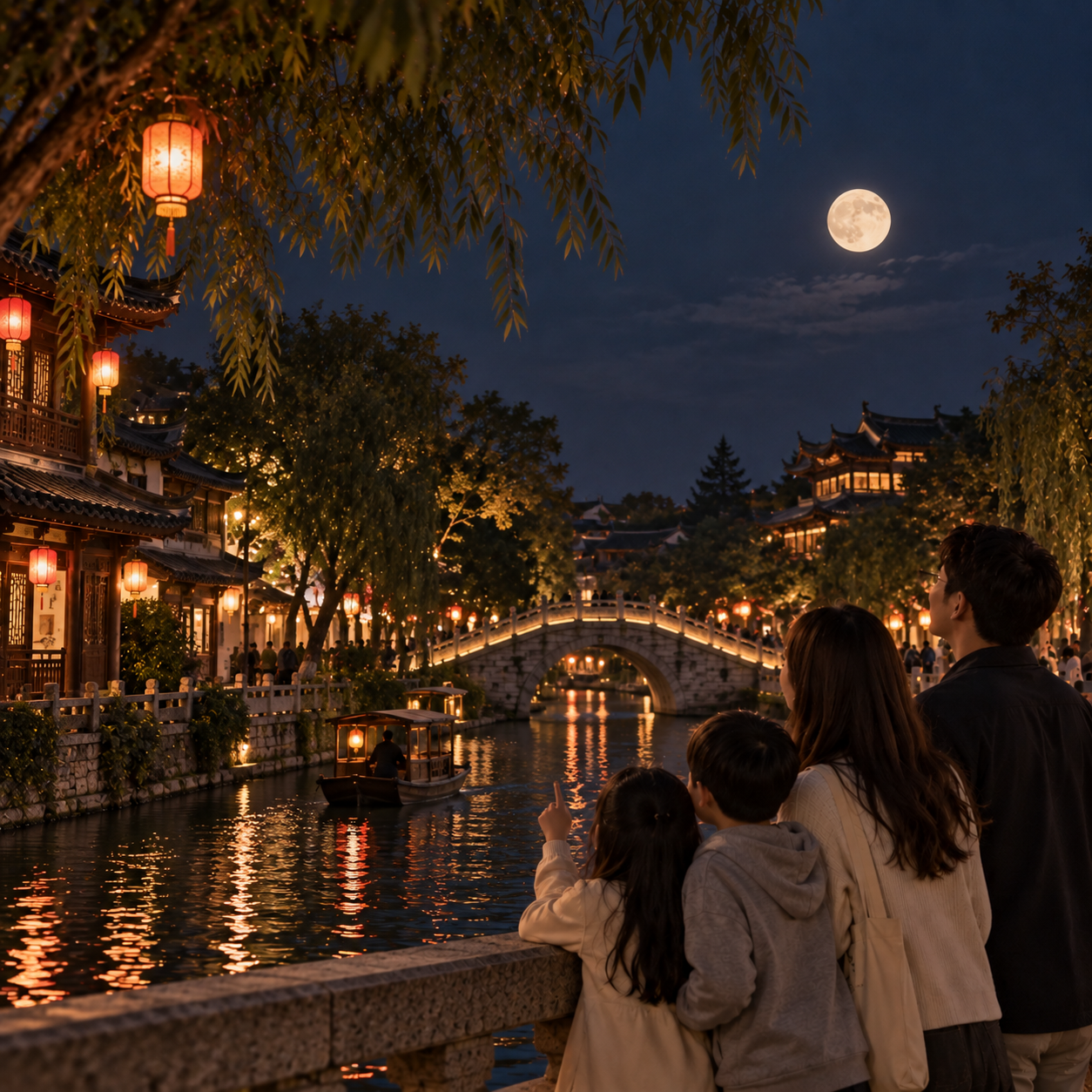
Family is still extremely important, but the full moon itself plays a much more visible role in the traditions.
Families gather together, admire the moon and eat mooncakes. Moon worship also has deep historical roots, and lanterns and moon-related celebrations are common in many places.
The moon is also connected to one of China's best-known legends: Chang'e (嫦娥), the figure traditionally associated with the moon.
So if I had to explain the difference very simply to someone unfamiliar with either holiday, I would say:
Korean Chuseok often emphasizes ancestors and returning home, while the Chinese Mid-Autumn Festival places particularly visible emphasis on family reunion and the full moon.
That's a simplification—both holidays have long histories and regional variations—but it's a useful starting point.
Songpyeon vs. Mooncakes
Food makes the difference even easier to see.
In Korea, the food most strongly associated with Chuseok is songpyeon (송편).
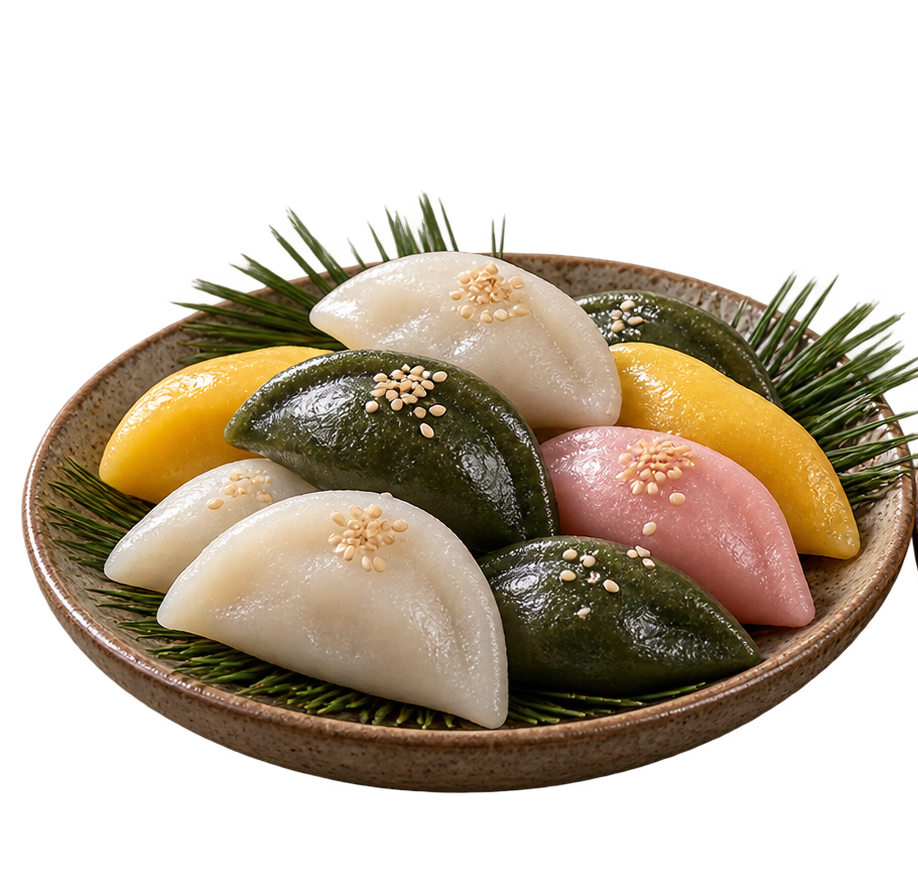
Songpyeon are small rice cakes traditionally filled with ingredients such as sesame seeds, beans or chestnuts. Their distinctive half-moon shape is one of the most recognizable symbols of Korean Chuseok. Korea's official cultural materials specifically identify eating songpyeon as a seasonal Chuseok custom.
In China, it's mooncakes (月饼).
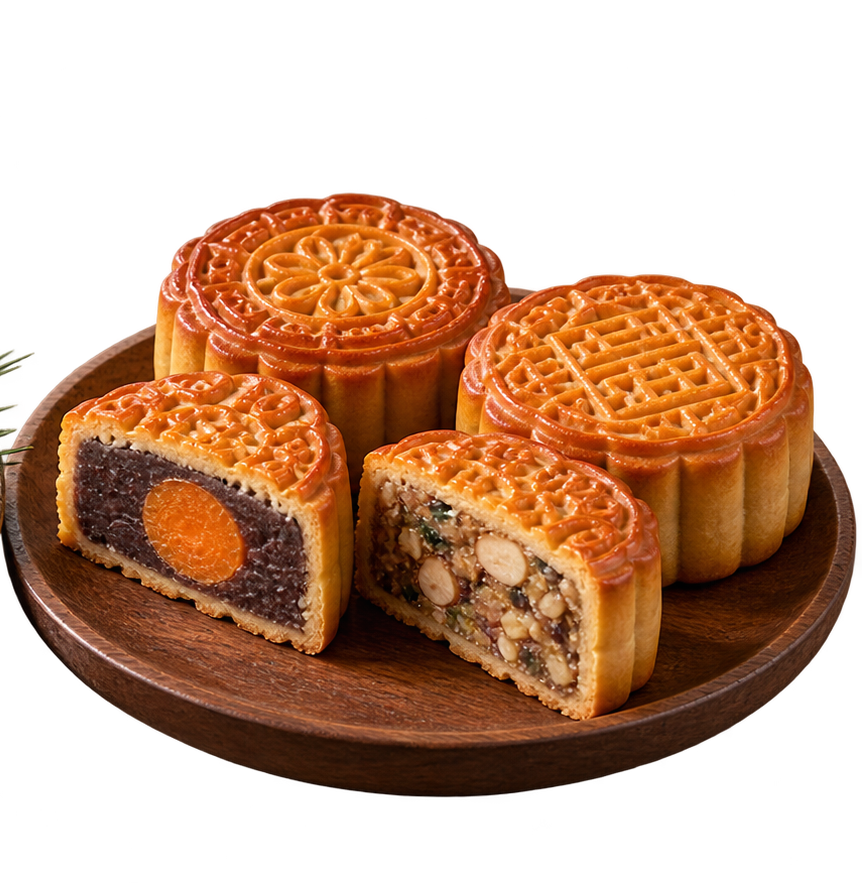
Mooncakes are round pastries that come in many regional varieties and fillings. Sharing and eating them during the Mid-Autumn Festival has become closely associated with reunion.
So there's an easy way to remember it:
Korea → Songpyeon 🍡
China → Mooncakes 🥮
Interestingly, even their shapes tell different stories.
The Chinese mooncake emphasizes the round full moon, while Korea's iconic Chuseok rice cake is traditionally shaped like a half moon.
The Atmosphere Is Different Too
This might be the more interesting difference if you're actually traveling in either country during the holiday.
Traditional Korean Chuseok can feel strongly connected to going back home.
You'll hear about people trying to get train tickets, driving long distances to their hometowns, visiting relatives and paying respects to ancestors.
In China, you'll also find huge numbers of people traveling to reunite with family. But visually, Mid-Autumn Festival celebrations can feature much more explicit moon imagery, lanterns, mooncakes and public cultural events centered around appreciating the full moon.
In other words, the two holidays can occur under the same full moon while looking surprisingly different on the ground.
Both Holidays Are Changing
There's one more similarity that's easy to overlook.
Neither holiday is frozen in the past.
In Korea, some people now spend Chuseok traveling, meeting friends or simply resting instead of attending a large extended-family gathering. Korea's official cultural coverage has documented this diversification of Chuseok customs for years.
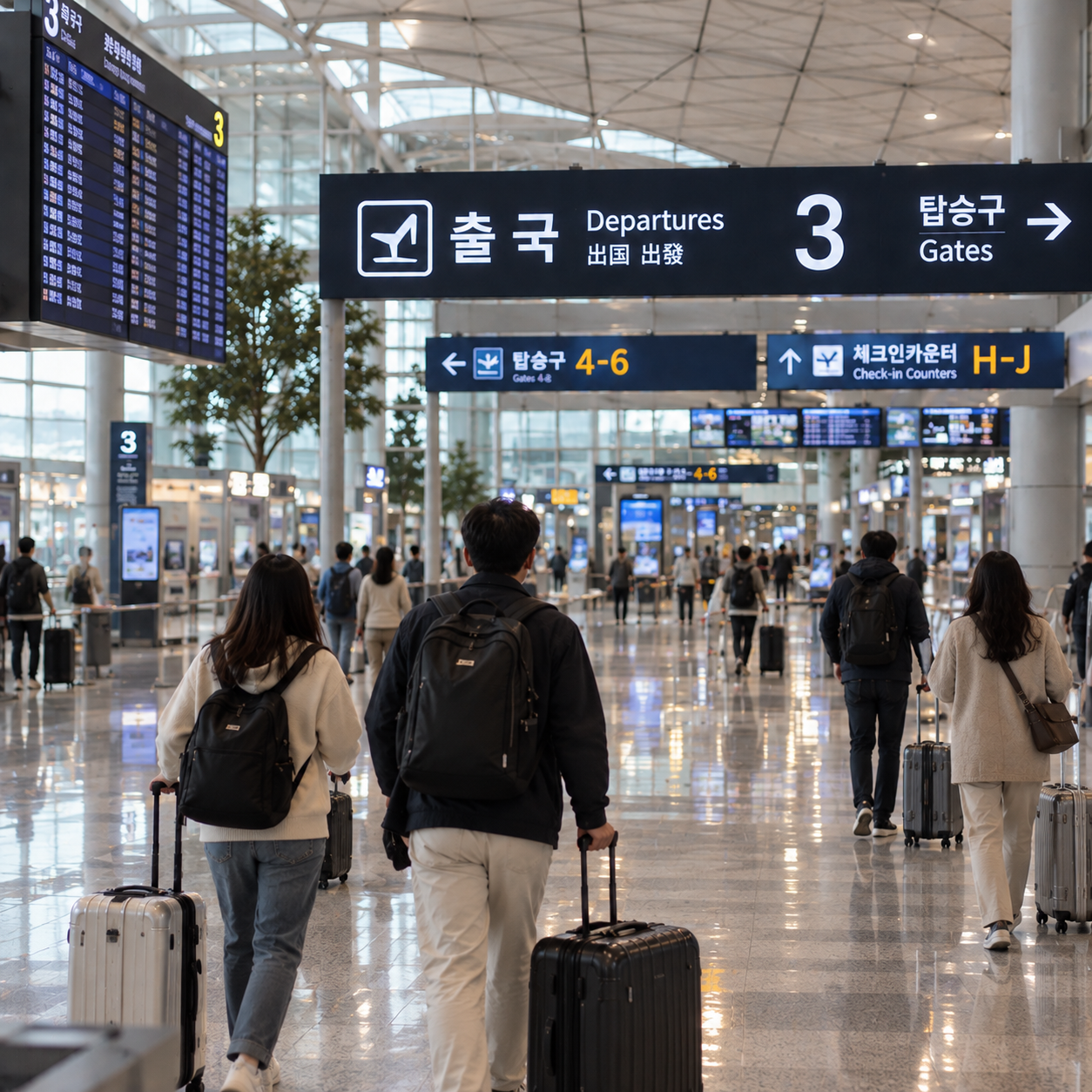
China's Mid-Autumn Festival is also both a family holiday and a major period for travel, shopping and public cultural events. In 2026, for example, China's Mid-Autumn Festival holiday runs from September 25–27, alongside a nationwide campaign promoting cultural and tourism activities.
Traditions remain important, but the ways younger generations experience traditional holidays continue to evolve in both countries.
Chuseok vs. Mid-Autumn Festival at a Glance
| 🇰🇷 Korean Chuseok | 🇨🇳 Chinese Mid-Autumn Festival | |
|---|---|---|
| Date | Lunar August 15 | Lunar August 15 |
| Major theme | Family, harvest, ancestors | Family reunion, harvest, full moon |
| Famous food | Songpyeon | Mooncakes |
| Traditional activities | Charye, seongmyo, family gatherings | Moon viewing, mooncakes, lantern-related festivities |
| Moon symbolism | Important | Especially prominent |
| Ancestor traditions | Traditionally prominent | Historical traditions exist, but modern festival imagery emphasizes reunion and the moon |
| Modern changes | Travel, rest, smaller gatherings | Travel, tourism, shopping, cultural events |
Of course, customs vary by family and region in both countries. This table is meant to show the broad differences rather than suggest that everyone celebrates in exactly the same way.
Same Date, Different Traditions
What I find most interesting is that Chuseok and the Mid-Autumn Festival share the same date on the lunar calendar but have developed distinct cultural identities.
Both celebrate family and autumn.
But in Korea, Chuseok has traditionally been closely connected with returning home, preparing food and honoring ancestors.
In China, the full moon, reunion and mooncakes are among the most recognizable symbols of the Mid-Autumn Festival.
Same season. Same full moon.
But two different ways of understanding and celebrating it.
Which tradition would you most like to experience: making songpyeon in Korea or eating mooncakes under the full moon in China?