What Is Chuseok? How Korea’s Biggest Family Holiday Is Changing
Chuseok was once centered on ancestors and family gatherings. See how Korea's biggest traditional holiday is changing with travel, rest, and younger generations.
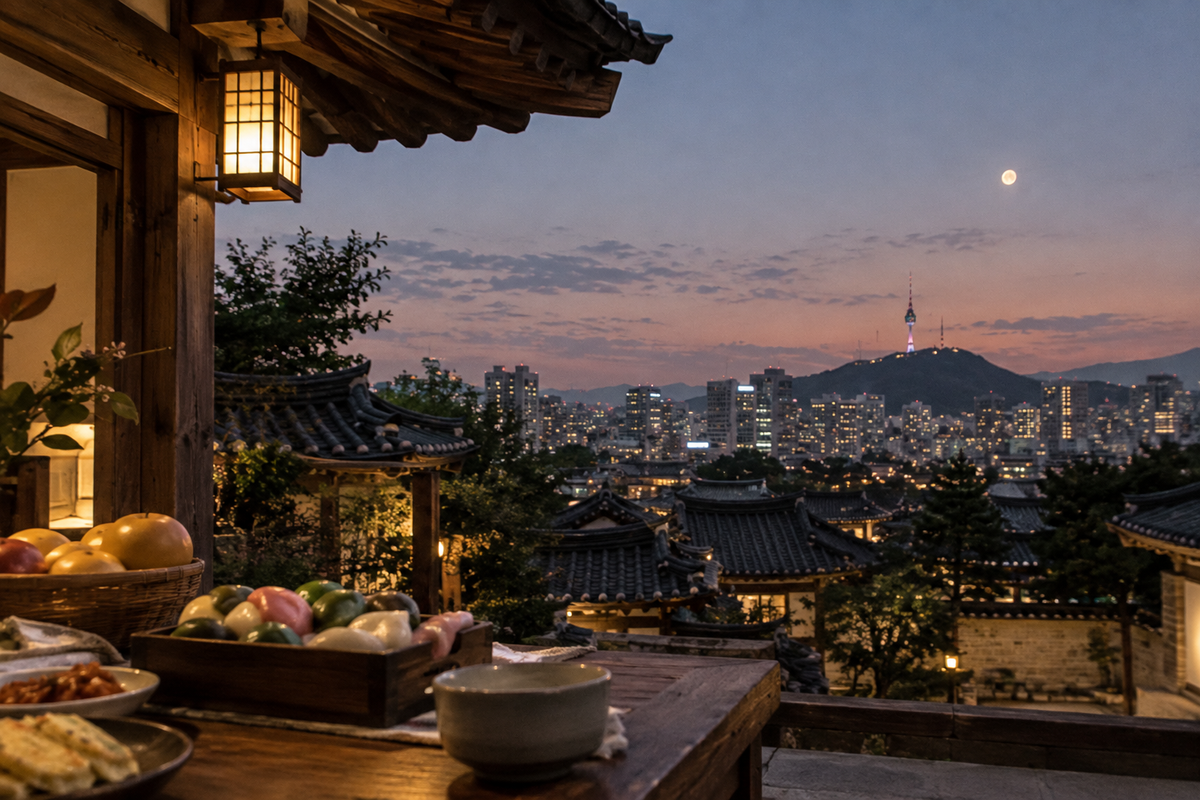
Chuseok is coming next week, and if you're in Korea, you'll probably notice something different.
Train tickets sell out quickly, highways get crowded, some neighborhoods become unusually quiet, and many businesses close for the holiday.
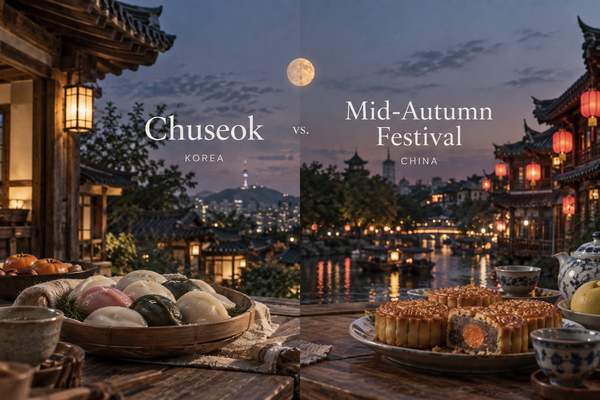
Chuseok is often described as the Korean Thanksgiving, but I don't think that translation fully explains what the holiday means in Korea.
Traditionally, Chuseok was strongly connected to family, ancestors, and returning to your hometown. But the way Koreans spend Chuseok has been changing, especially among younger generations.
What Is Chuseok?
Chuseok (추석) falls on the 15th day of the eighth month of the lunar calendar.
Traditionally, families traveled back to their hometowns, gathered with relatives, prepared large amounts of food, visited ancestral graves, and performed charye (차례), a ritual honoring their ancestors.
Food was an important part of the tradition.
Families prepared dishes such as jeon, fruit, meat, vegetables, and songpyeon, the half-moon-shaped rice cakes associated with Chuseok.
And preparing all of this could take a lot of work.
Chuseok When I Was Younger
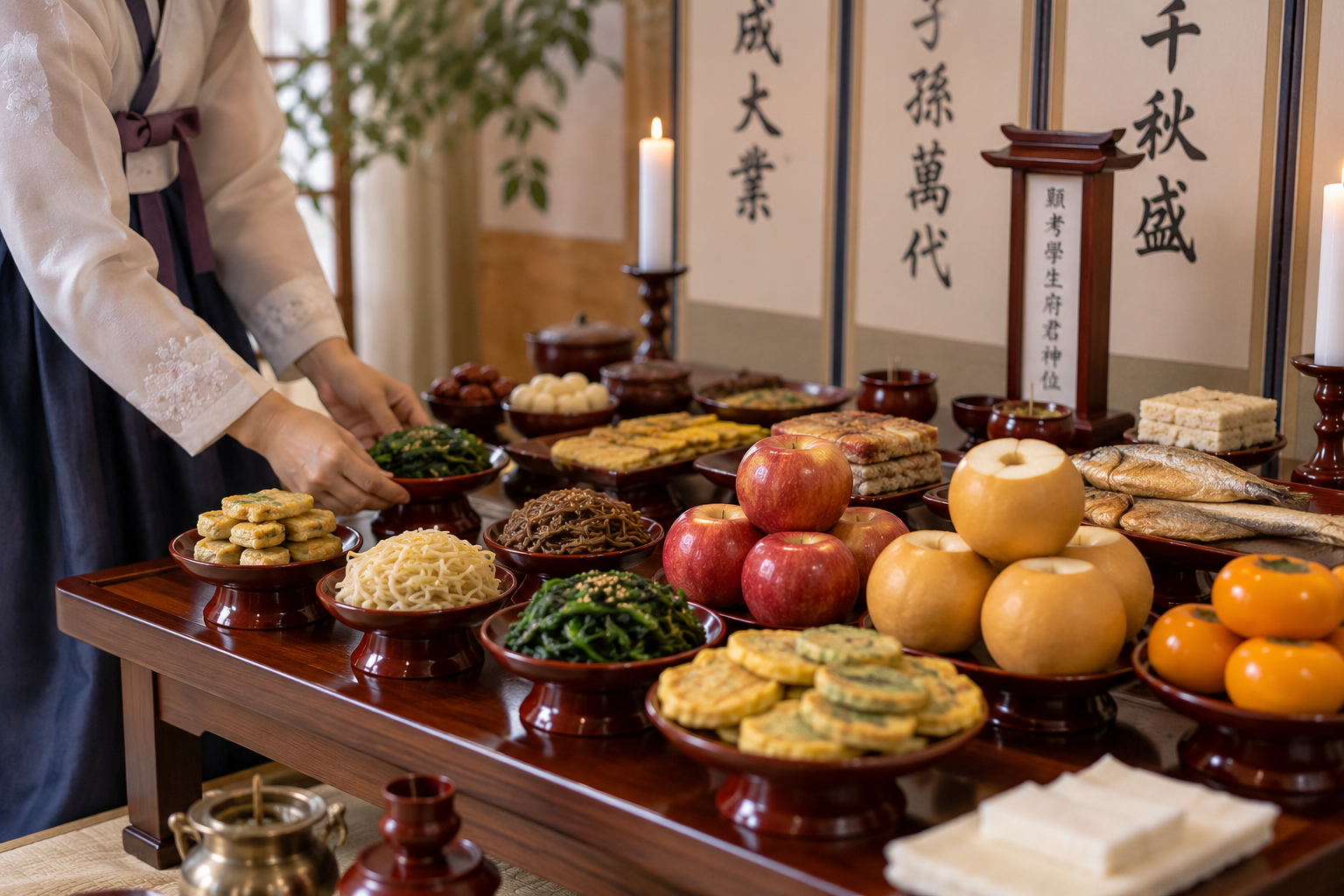
When I was in high school, we even learned about traditional rules for arranging food on an ancestral ritual table.
One expression I remember is hongdongbaekseo (홍동백서), a traditional arrangement principle often explained as placing red-colored fruits toward the east and white-colored fruits toward the west.
There were other rules about where different foods should be placed as well.
Of course, not every Korean family followed exactly the same rules. Different families and regions had their own traditions.
But the fact that we were learning about these customs at school shows how familiar ancestral rituals once were in everyday Korean culture.
For many families, Chuseok wasn't simply a few days off. It meant preparing food, traveling home, meeting extended family, and remembering previous generations.
A Small Language Note: Korean Family Titles Are Complicated
This traditional emphasis on family relationships can even be seen in the Korean language.
English has convenient words such as uncle, aunt, and cousin. Korean can be much more specific.
There are different words depending on whether someone is related through your mother's or father's side of the family and exactly how that person is related to you.
Words such as imo (이모), gomo (고모), oesamchon (외삼촌), imobu (이모부) and gomobu (고모부) all describe relationships that might simply become "aunt" or "uncle" in English.
It can be confusing for Korean learners, but it also gives you a glimpse into how important kinship relationships have traditionally been in Korean society.
Then Chuseok Started to Change
Chuseok had already been changing gradually, but COVID-19 accelerated that change.
During the pandemic, large family gatherings and long-distance travel were discouraged. Some families dramatically simplified their ancestral rituals, while others experimented with meeting relatives or participating in memorial traditions remotely.
And after experiencing a simpler Chuseok, some families didn't completely return to the old way.
Today, there isn't one single way to celebrate Chuseok.
Some families still prepare traditional food and perform charye. Others simply have a meal together. Some don't perform ancestral rituals at all.
And increasingly, people use the holiday for something completely different: resting or traveling.
Chuseok Has Become a Travel Opportunity
One reason is surprisingly practical.
Korea has many public holidays, but quite a few of them give you only a short break.
Chuseok is different.
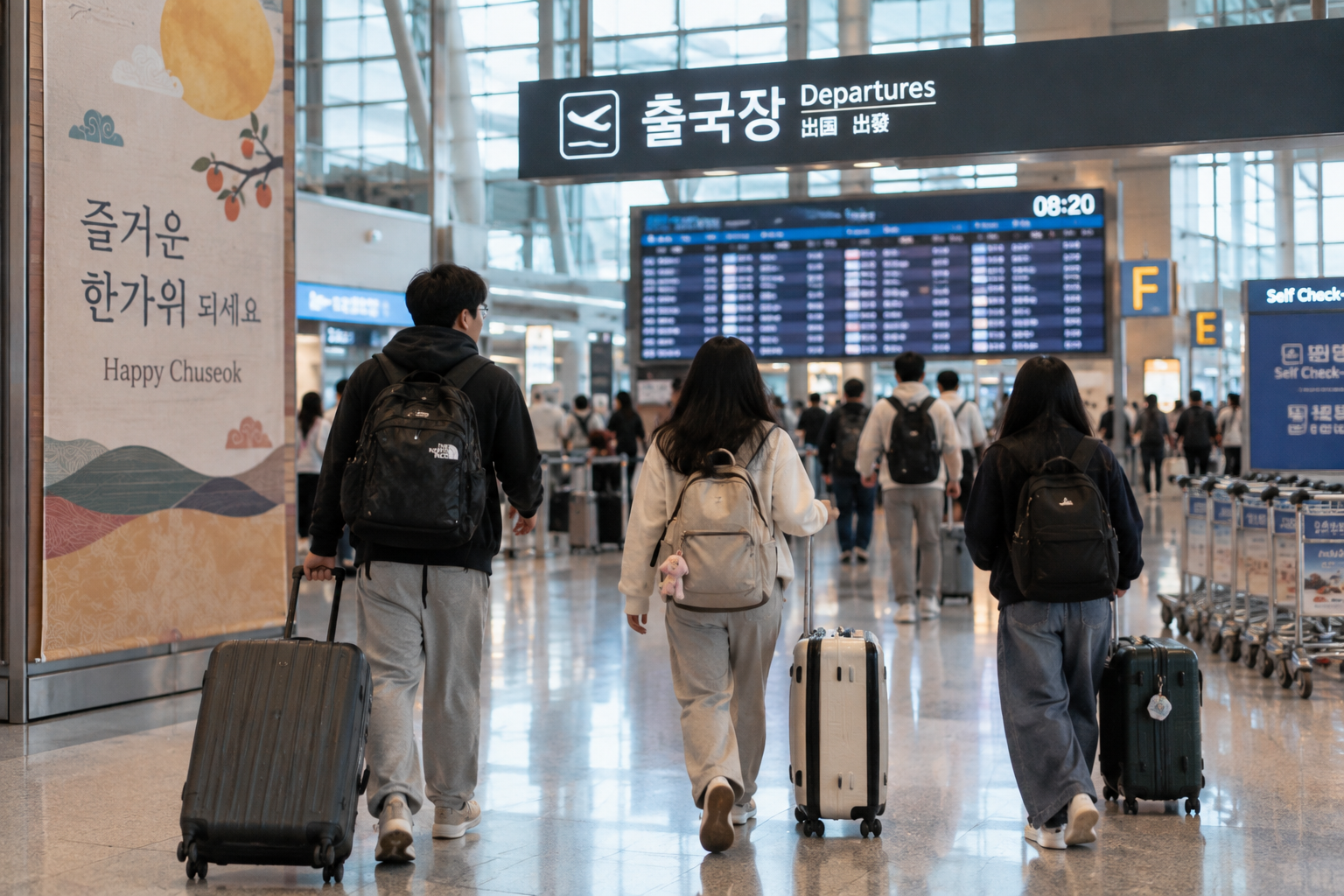
The official Chuseok holiday generally covers three days, and depending on where weekends and substitute holidays fall, the break can become longer. Add one or two vacation days, and suddenly you have enough time for a proper trip.
That's why the Chuseok period has also become a popular opportunity to travel.
Some people take short trips around Korea or visit nearby countries in Asia. With enough vacation days attached to the holiday, longer trips to destinations such as Europe or the United States can become possible too.
So while one family may be preparing songpyeon, another person might be packing a suitcase.
Why Some Young Koreans Don't Go Home for Chuseok
There's another reason some younger Koreans aren't particularly excited about family gatherings.
The questions.
If you've ever attended a large Korean family gathering, you may know what I mean.
"When are you getting a job?"
"When are you getting married?"
"Are you dating anyone?"
"How is school going?"
They're often intended as expressions of interest or concern. But if you're looking for a job, struggling with school, single, or simply don't want to discuss your private life with relatives, those questions can become stressful very quickly.
That's one reason some younger people prefer to spend Chuseok differently.
They might stay home alone, meet friends, go on a date, travel, or simply enjoy doing absolutely nothing for a few days.
Is Seoul Empty During Chuseok?
This creates an interesting situation if you're visiting Seoul during Chuseok.
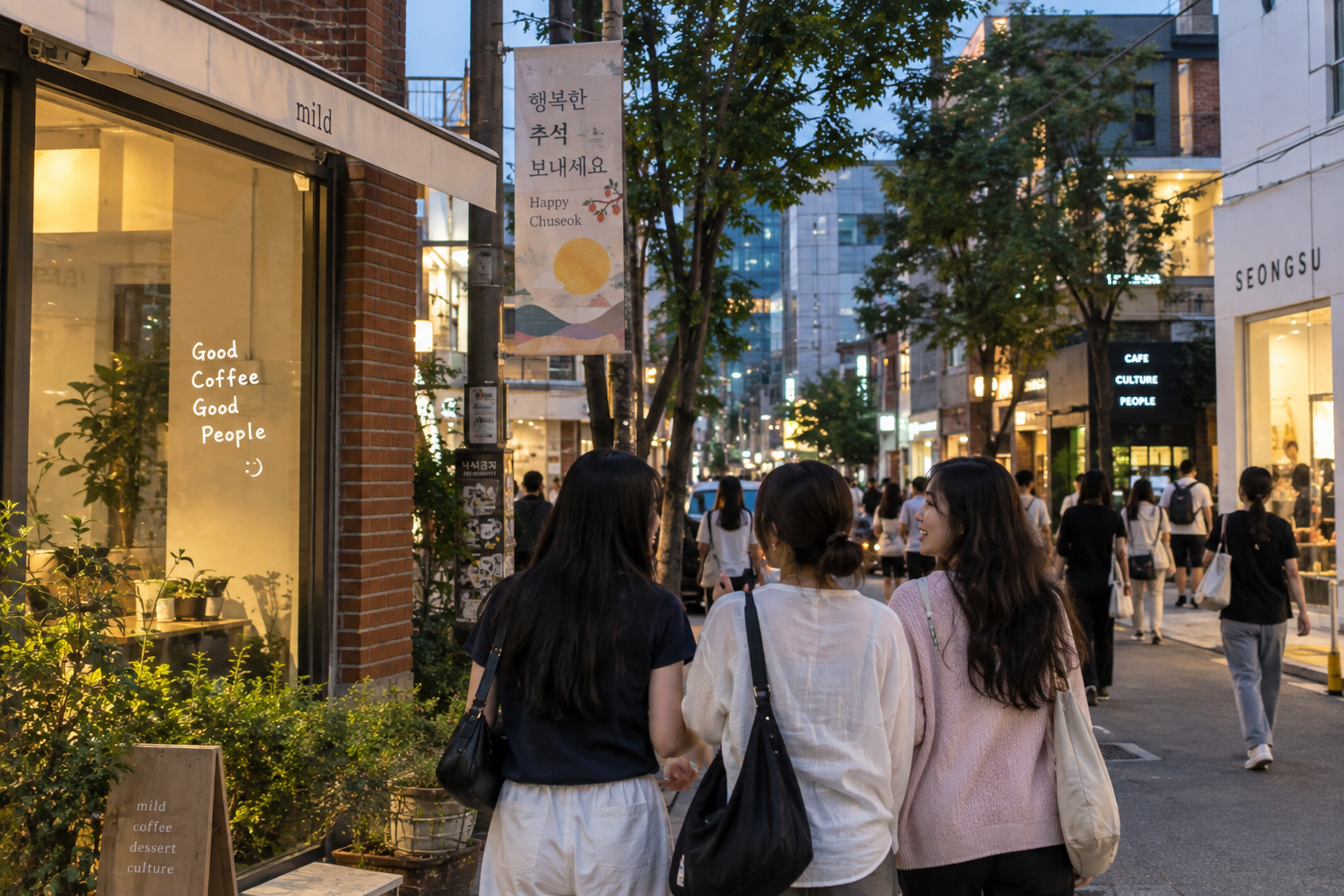
Some residential and business areas can feel surprisingly quiet because many people have left Seoul to visit their hometowns. Smaller restaurants and independently owned businesses may also close for the holiday.
But that doesn't necessarily mean all of Seoul is empty.
Go to popular shopping districts or areas where people in their 20s and 30s spend their free time, and you may encounter a completely different atmosphere.
There are still plenty of people who remain in Seoul during the holiday.
So the image of "everyone leaving Seoul for Chuseok" is becoming less straightforward than it once was.
Chuseok Isn't Disappearing — It's Changing
I don't think Chuseok is becoming less important.
Rather, the meaning of the holiday seems to be becoming more individual.
For previous generations, there was a fairly clear expectation: go home, meet your relatives, prepare food, and honor your ancestors.
Today, that might still mean gathering with your entire family.
But it could also mean having one meal with your parents, taking a flight somewhere, meeting friends, or spending three peaceful days at home.
In a way, the changing Chuseok holiday reflects a broader change happening in Korean society—from large extended-family traditions toward smaller families and more individual lifestyles.
The traditions haven't completely disappeared. They're simply existing alongside new ways of spending the holiday.
And if you're in Korea during Chuseok, you can see both versions at the same time.
How would you spend a long holiday like Chuseok: with your extended family, traveling somewhere, or staying home and enjoying the break?