Is Bottled Water in Korea Safe? What Travelers Should Know
Is bottled water in Korea safe? Learn what travelers should know about Korean water brands, tap water, sparkling water, and label-free bottles.
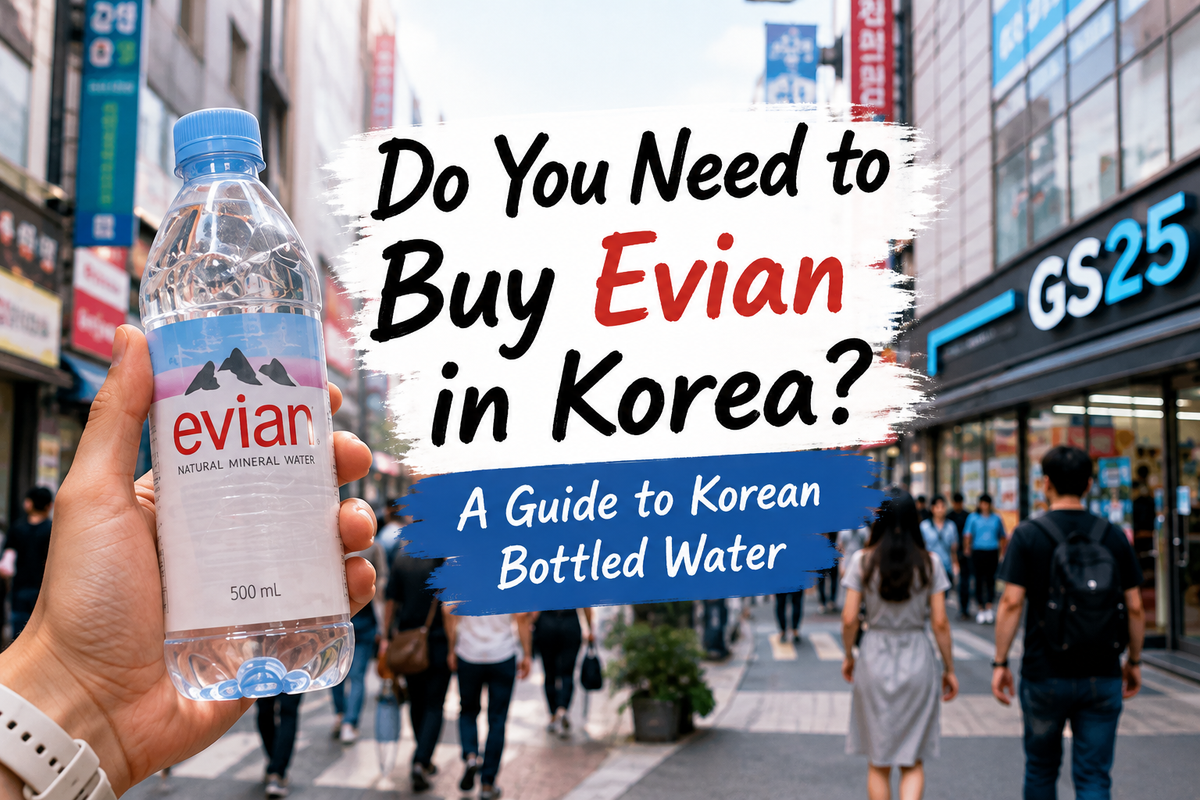
Today, I saw a foreign traveler walking around Korea with a bottle of Evian.
There is obviously nothing strange about drinking Evian. You can easily find it in Korea, and if it's the water you like, there's no reason not to buy it.
But seeing that bottle reminded me of something I experienced when I was living in the United States.
When I first arrived in the U.S., I didn't know anything about American bottled-water brands.
There were so many different kinds of water at supermarkets and convenience stores—spring water, purified water, mineral water—and the prices varied much more than I expected.
I remember seeing extremely cheap bottled water for less than a dollar and wondering:
"Can I really drink this?"
Someone had also warned me about buying certain cheap spring waters, saying they could upset my stomach. I had no idea whether that was actually true, but as someone who had just arrived in another country, it made me nervous.
So sometimes I bought Fiji Water or another expensive brand simply because it felt safer.
Looking back, I realized something funny.
Maybe some foreign travelers in Korea are doing exactly what I did in America.
They recognize Evian. They know it's a famous mineral-water brand. So when they see it at a Korean convenience store, they choose the familiar bottle rather than buying a Korean brand they've never heard of.
If that's the reason you're buying Evian in Korea, there's something I'd like to tell you:
You really don't need to buy expensive imported bottled water just because you're worried about Korean water.
Bottled Water in Korea Is Not Just "Cheap Water"
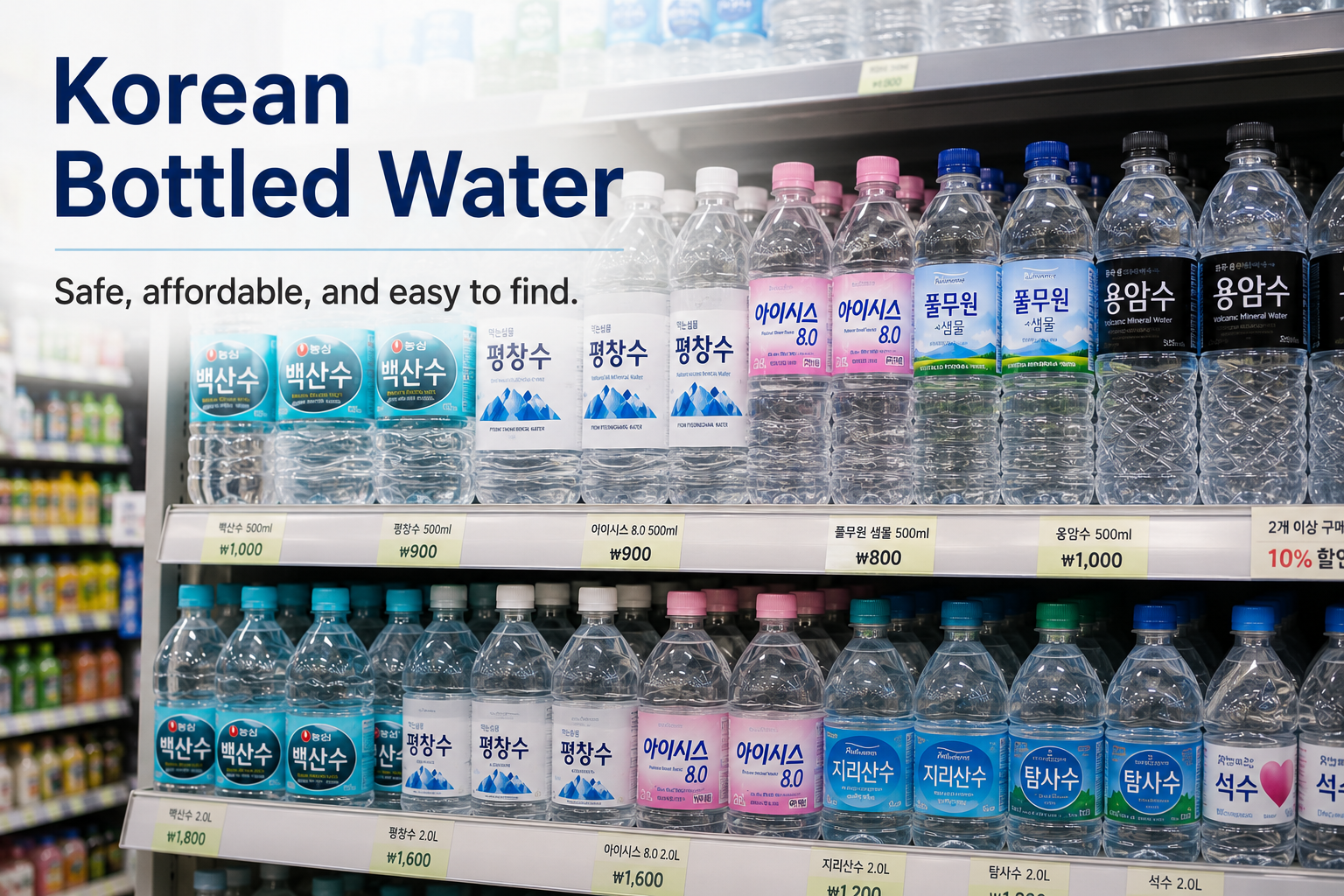
Korea has many domestic bottled-water brands, and bottled water is something Koreans buy every day.
One of the most recognizable is Jeju Samdasoo (제주삼다수).
If you've ever visited a Korean convenience store, you've probably seen the bottle even if you didn't recognize the name.
Samdasoo comes from Jeju Island and is probably one of the first Korean bottled-water brands I would recommend to a traveler who has no idea what to choose.
But you don't necessarily have to buy Samdasoo either.
Korean convenience stores and supermarkets carry many domestic brands, including their own more affordable bottled-water options.
For most travelers, there's no need to search for an imported premium brand just to find drinkable bottled water.
And that's another major difference: price.
Imported water such as Evian can cost considerably more than ordinary Korean bottled water. If you're staying in Korea for several days and buying multiple bottles every day, that difference can add up surprisingly quickly.
I'd rather spend that money on coffee—or food. 😄
A Little Korean Language Tip: What Does “수” Mean?
Here’s a small Korean language tip that might help when you’re shopping for water in Korea.
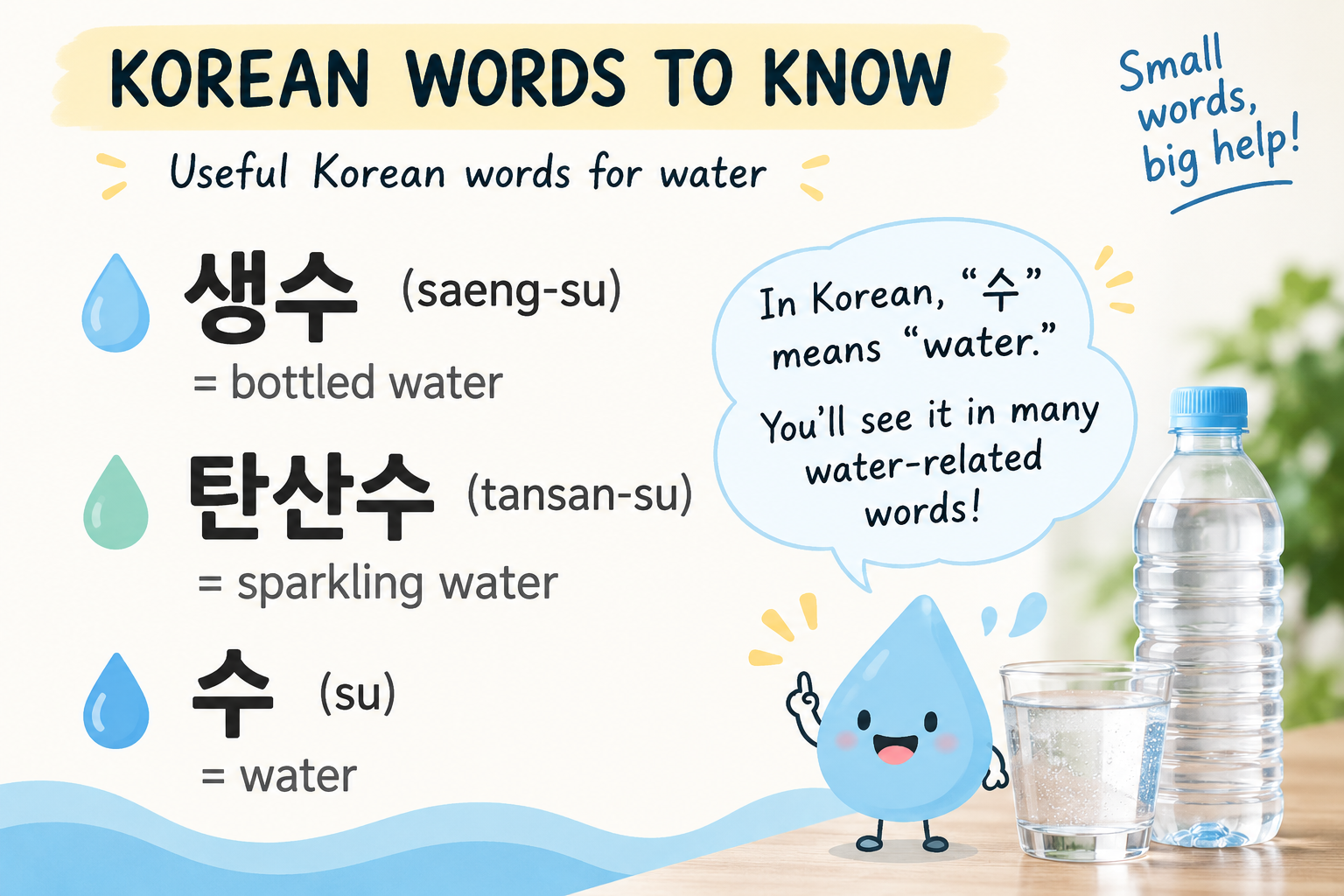
The Korean word 수 (水) means “water.” It originally comes from the Chinese character 水, and you’ll often see it as part of Korean words related to water.
For example:
- 생수 (生水) — bottled drinking water
- 탄산수 (炭酸水) — sparkling/carbonated water
- 정수 (淨水) — purified water
- 해수 (海水) — seawater
So if you see a Korean product name ending in -수, there’s a good chance it has something to do with water.
You can even see this in the name Jeju Samdasoo (제주삼다수). The final 수 (水) means “water.”
And one word you'll see especially often at convenience stores is 생수.
생 (生) has the meaning of “raw,” “fresh,” or “natural,” while 수 (水) means “water.” In everyday Korean, 생수 is the common word used for bottled drinking water.
So if you're looking for a regular bottle of still water at a Korean convenience store, remembering just one word can help:
생수 = bottled water
Why Do Some Korean Water Bottles Have No Labels?
You may also notice that many bottled waters in Korea don't have labels anymore.
These are called 무라벨 (mu-label) products. The plastic label is removed to make recycling easier and reduce unnecessary plastic waste.
So if you see a completely clear bottle with no colorful wrapper around it, don't be confused. It's still regular bottled water. The product information may instead be printed on the cap or outer packaging.
This is especially common when bottled water is sold in multipacks.
무라벨 (mu-label) = label-free
무 (無) = without / none
라벨 = label
What About Korean Tap Water?
This is where things become a little more complicated.
Korea's municipal tap water is treated and monitored, and Seoul even has a name for its tap water: Arisu (아리수).
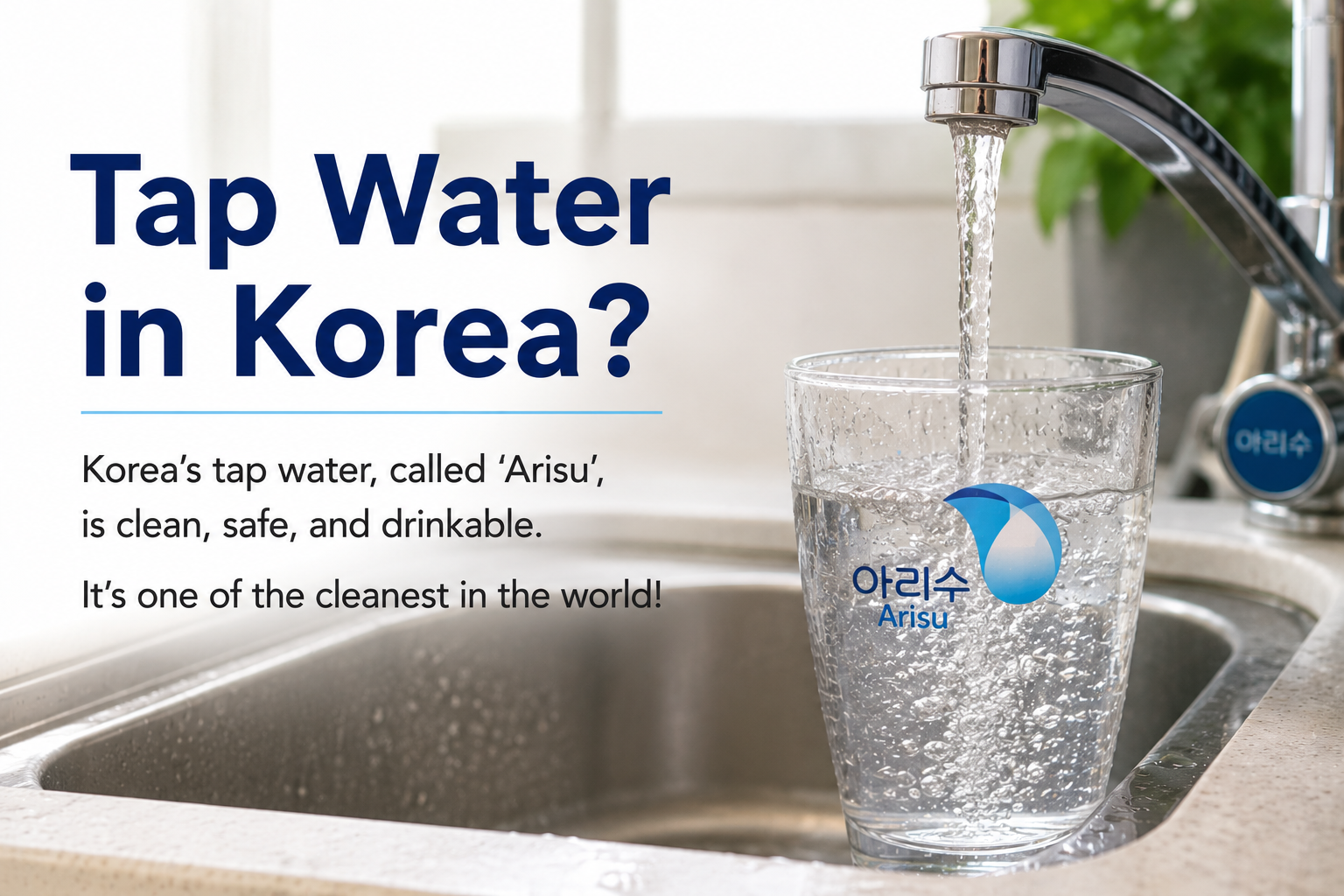
However, that doesn't mean every Korean household regularly drinks water directly from the faucet.
Many Korean homes use water purifiers, and some people boil their water or simply buy bottled water.
So if you're traveling in Korea, you don't have to force yourself to drink straight from the tap just because you've heard that Korean tap water is safe.
At hotels and accommodations, you may also find bottled water or a water purifier available.
The important point is simply that you don't need to assume that expensive imported water is your only safe choice.
Sparkling Water Is Easy to Find Too
If you normally drink sparkling water instead of still water, you also have plenty of choices in Korea.
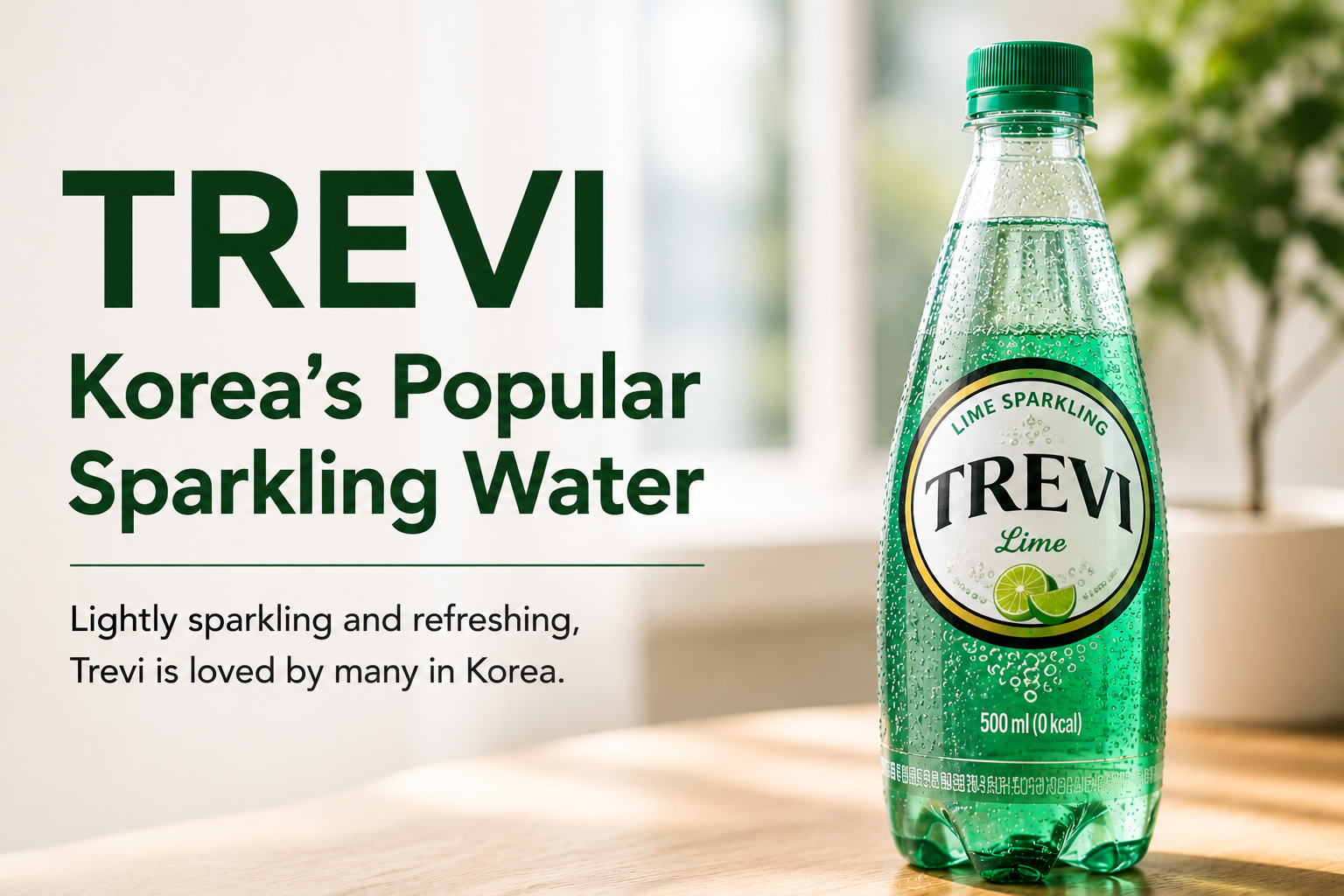
Convenience stores and supermarkets sell both imported and Korean sparkling-water brands, including plain and flavored versions.
So again, there's usually no need to specifically search for an expensive imported bottle unless you simply prefer that particular brand.
Expensive Doesn't Necessarily Mean Better for Your Trip
I think travelers naturally become more cautious about water.
Nobody wants to spend part of a vacation dealing with an upset stomach, so choosing a familiar international brand feels reassuring.
I completely understand that because I did exactly the same thing in America.
But sometimes we're simply paying extra because we don't know the local brands yet.
That's why seeing that Evian bottle today made me want to write this post.
Of course, if you love Evian, drink Evian!
But if you're buying it because you're standing in a Korean convenience store thinking,
"I don't know these Korean brands. Is this water okay?"
you don't need to worry quite so much.
Try a Korean bottled water instead.
It's one of those very small things that can make traveling in another country feel a little less unfamiliar—and save you a little money at the same time.